Professor from University of Gdańsk (Poland) Visits UMH to Teach on Leadership and Teamwork in Sports
30 October 2026
As part of the Erasmus+ exchange program for faculty, Andrzej Piotrowski, an associate professor at the University of Gdańsk (Poland), visited the Miguel Hernández University of Elche (UMH). His stay included training activities as part of the UMH Bachelor’s in Physical Activity and Sports Sciences (CAFD) program, as well as a scientific meeting at the Institute of Bioengineering to explore new avenues for collaboration.
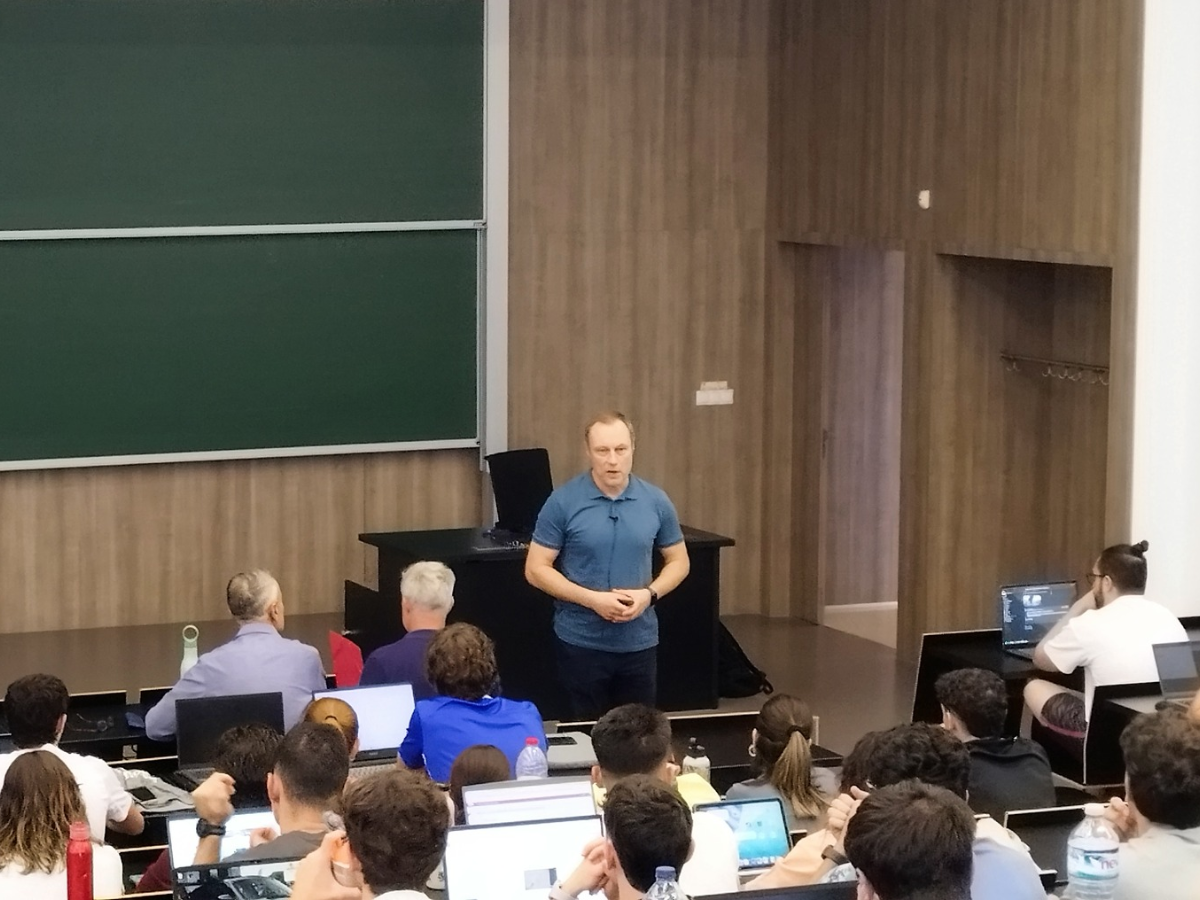 “Team Building in Sports” was the lecture given by associate professor Piotrowski for final-year students in the CAFD program. The lecture was part of required CAFD course, Coaching and Leadership in Sports, which is taught by UMH professors, Eduardo Cervelló and Carlos Montero. His lecture provided an opportunity to explore the importance of group cohesion, communication, leadership, and coordination among teammates as key factors in managing sports teams and enhancing group performance. The appearance of faculty from a European university offered CAFD students the chance to learn about other academic and professional perspectives on team management and the application of psychology to sports contexts.
Mobility of this type aims to consolidate UMH international cooperation and promote the exchange of knowledge, teaching experiences, and methodologies among European universities.
With a research background in psychology, Andrzej Piotrowski is an associate professor at the University of Gdańsk. There, he conducts his academic tasks at the Institute of Psychology and the Faculty of Social Sciences, where he heads the Division of Penitentiary Psychology and Rehabilitation. He earned a Ph.D. in psychology in 2009 and obtained his academic qualifications in the social sciences, in the discipline of psychology, in 2023.
His research accomplishments span various areas of psychology, including occupational psychology, group psychology, safety psychology, and sports psychology. This multidisciplinary perspective enables him to connect the study of human behavior with issues such as team management, interpersonal relationships, responses to high-pressure situations, and well-being in various work environments.
His visit to the UMH made it possible to apply some of this knowledge to physical activity and sport sciences, exposing students to an international perspective on the psychological and social processes involved in team dynamics.
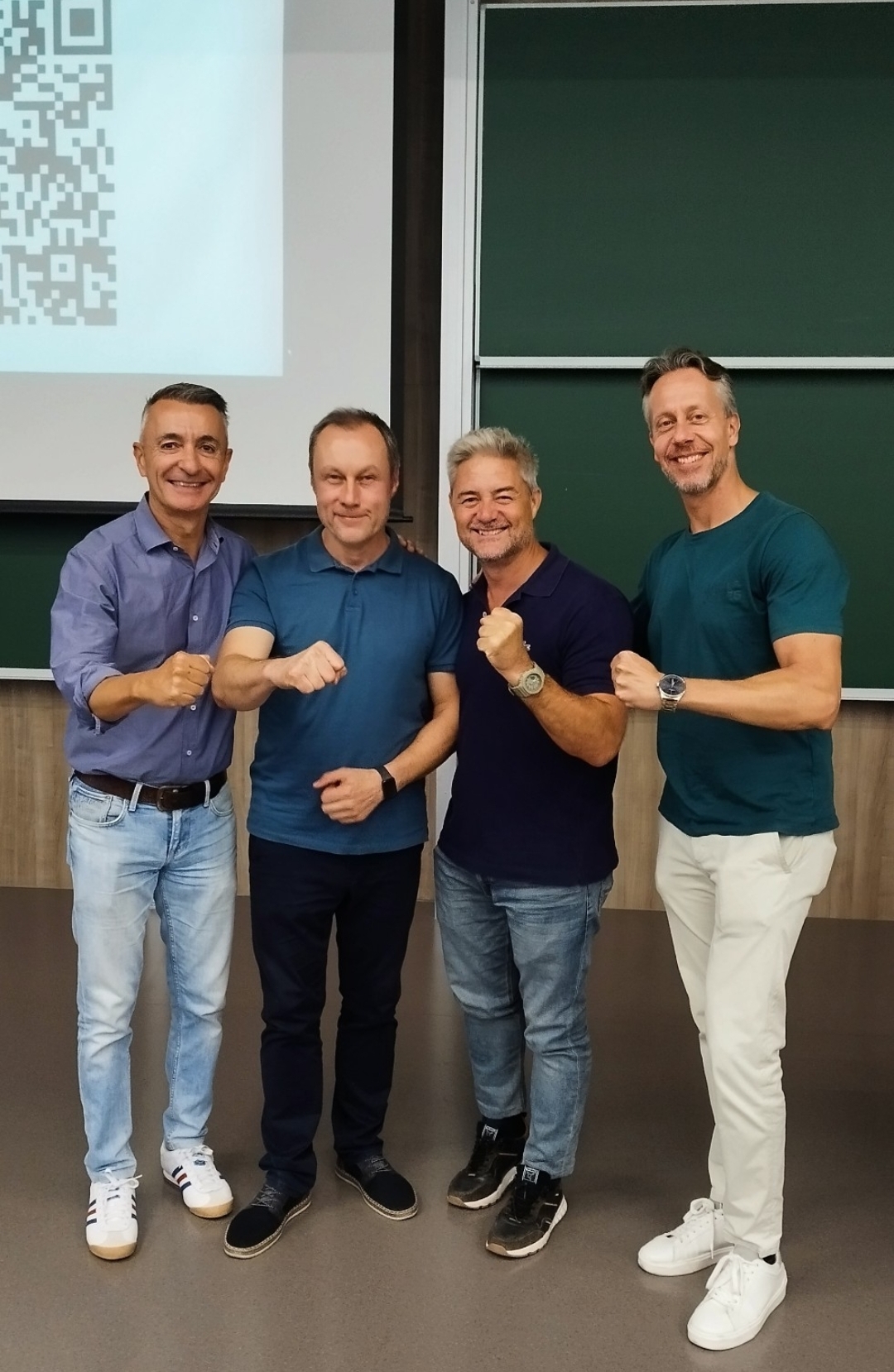 In addition to his lecture, associate professor Piotrowski also toured the UMH Institute of Bioengineering, where he met with Enrique Roche, a Professor of Nutrition and Bromatology. During the meeting, the two researchers exchanged ideas and proposals of mutual interest, with the goal of identifying potential avenues for scientific and interdisciplinary cooperation. Their meeting opens an opportunity to explore projects that bridge different areas of knowledge and foster exchanges among researchers at both universities. The meeting also highlights the importance of international academic networks in driving new research initiatives and expanding opportunities for collaboration among research groups.
The visit by Andrzej Piotrowski was spurred by Néstor Vicente Salar, a UMH Associate Professor of Nutrition and Bromatology, who has been collaborating academically and scientifically with Piotrowski for several years. The two of them have participated in scientific projects related to sports psychology, a shared area of interest that fosters dialogue between research on human behavior and the study of athletic performance.
Their relationship exemplifies the value of collaborative networks among researchers from different institutions and countries. The exchange of knowledge and the advancement of joint projects help enrich the scientific perspective, generate new research questions, and foster the international dissemination of results.
As such, Andrzej Piotrowski’s stop at the UMH reinforces collaboration that combines academic training, scientific exchange, and the exploration of future joint initiatives. It also highlights the potential of the Erasmus+ program as a tool for strengthening ties between European universities and promoting teaching linked to research and international cooperation.