Seven European Universities from NeurotechEU Alliance Launch the European Master in Neurotechnology, the First Joint Master in this Field
8 October 2026
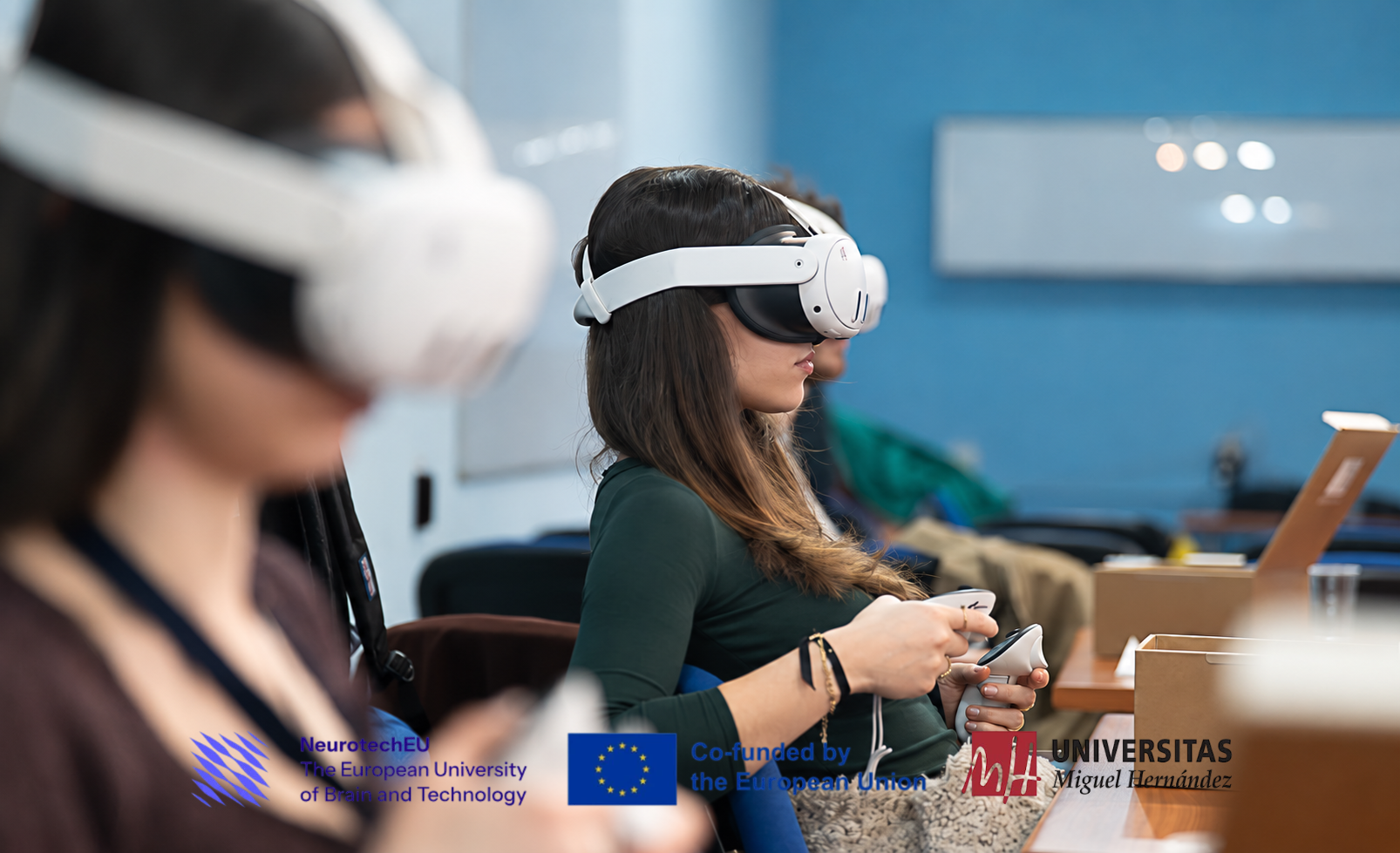 The European Master in Neurotechnology (EMN), a new joint master’s program designed by seven European universities that just received a positive report by the Accreditation Organisation of the Netherlands and Flanders (NVAO) panel, is set to launch for the 2027 – 2028 academic year. Bringing together expertise in neuroscience, medicine, engineering, data science and computation, the program will offer transdisciplinary training in one of the fastest-growing fields at the intersection of brain science and technology: neurotechnology. The program has been designed in line with European Approach for Quality Assurance of Joint Programmes quality standards and is currently completing the final implementation steps ahead of its launch.
The EMN was jointly designed by seven member universities of The European University of Brain and Technology consortium (NeurotechEU). These include Radboud University, the Netherlands; Miguel Hernández University of Elche, Spain; University of Bonn, Germany; Boğaziçi University, Türkiye; Universitatea de Medicină și Farmacie din Cluj-Napoca, Romania; University of Lille, France; and University of Reykjavik, Iceland. Together, the partner institutions have created an integrated program that offers students an international learning experience combining academic mobility, challenge-based learning, and close interaction with research and innovation environments.
Within the program, as Nick F. Ramsey, Chair of the EMN Academic Program Board, explains, “Students will benefit from learning to bridge between disciplines, across multiple European institutions, engaging with leading researchers and innovation ecosystems, and advancing skills that are increasingly demanded by academia, healthcare providers and the neurotechnology industry.”
The EMN is designed to address urgent social and health challenges by offering an innovative learning experience that transcends traditional disciplinary boundaries. With a 120-ECTS curriculum taught in English over two years, the EMN is structured around four major areas—systems neurobiology, neurology & human cognition, technology, and computing—and places special emphasis on ethical, legal, and social considerations, preparing students to find responsible solutions in a rapidly evolving field. By combining neuroscience, medicine, technology, and data science, the master’s program equips students to develop cutting-edge solutions—ranging from wearable sensors and brain-computer interfaces to clinical applications and AI-driven neurotechnologies—all while critically analyzing their ethical and social implications.
This new program responds to a growing demand for professionals capable of working across the fields of neuroscience, healthcare, and emerging and digital technologies. By training a new generation of responsible, transdisciplinary professionals and innovators, the EMN not only advances healthcare and fosters technological progress, but also strengthens Europe’s leadership in brain research and technology