Investigators from the UMH, Brazil and Portugal study, along with Students and Citizens, the Impact of Eco-anxiety on Mental Health
Internacionalización de centros
7 July 2026
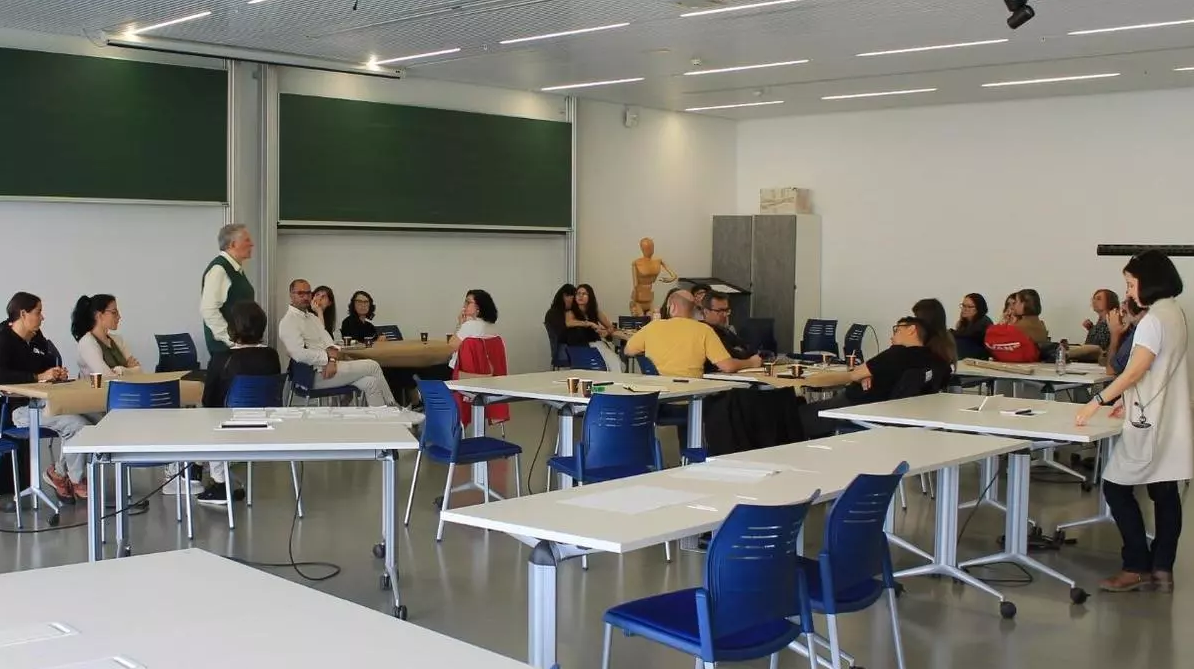 This week, the Miguel Hernández University of Elche (UMH) hosted the “Eco-anxiety and Climate Change” citizen lab, an initiative designed as a space for collaboration and dialog that brought together, among others, international researchers from Brazil and Portugal, students from various degree programs, and members of local organizations, such as Aigües d’Elx and Elche Acoge. They addressed the emotional and mental health impacts of what is known as eco-anxiety, which is linked to the climate crisis.
The session, held last Monday on the Elche Campus, was led by Antonio Lafuente, a researcher emeritus at the Spanish National Research Council (CSIC) and an expert in participatory methodologies and citizen science. Throughout the day, attendees first shared knowledge, experiences, and concerns in a shared setting with the goal of identifying challenges and co-creating proposals to address eco-anxiety. This phenomenon is understood as a normal emotional response to climate change that, if not properly identified and managed, or if it remains at high levels for an extended period, can lead to a deterioration in mental health.
The event featured the participation of researchers Alicia Matijasevich (University of São Paulo), Jessica Maruyama (Mackenzie Presbyterian University), and Ana Isabel Ribeiro (University of Porto), as part of the international Cli-Mind project. This initiative analyzes how young people perceive and experience the climate crisis, as well as the role of the media in this process, and is funded by the SPRINT program of the UMH Service of International Relations and Cooperation and the Brazilian agency, FAPESP. At the UMH, the team is led by Professor María Pastor and includes journalism faculty members Alba García, Alicia de Lara, and Jesús Mula.
The climate crisis is a global phenomenon that affects us locally, and there are ways to combat it that do not require massive investments, extensive expertise, or large-scale mobilization. And this is where this diverse group—most of whom did not know one other—has stepped in.
This event confirmed that creating safe, non-judgmental spaces—where all voices can be heard without the need to introduce themselves first, so as not to intimidate those who may not be as knowledgeable as the experts—promotes equal participation among the general public, the academic community, and students, facilitating the exchange of experiences and the joint development of responses to climate change.
The participants—numbering around thirty—agreed on the need to reframe the climate narrative, shifting from an approach centered on alarmism to a more balanced discourse that highlights ongoing initiatives and awareness-raising efforts. This more constructive approach helps to foster hope and encourage environmentally friendly behaviors, especially among young people.
This process yielded five proposals for local implementation, aimed at improving climate communication. Notable among these are the creation of digital guides to combat misinformation, aimed at both the general public and professionals; the sharing of success stories from other contexts; and the development of educational programs for preschool and high school students, involving students, teachers, and families.
Overall, the experience highlighted the value of citizen laboratories—or “civic kitchens,” to use the term preferred by Antonio Lafuente—as effective tools for bridging the gap between science and society and fostering a more engaged, resilient, and committed citizenry when it comes to climate action.